Professor Madeleine Reeves
Professor in the Anthropology of Migration
Fellow of St Hugh’s College
Unit Affiliations: Centre on Migration, Policy and Society (COMPAS) and Institute for Social and Cultural Anthropology (ISCA)
Contact
Madeleine.Reeves@compas.ox.ac.uk
Supervision
I am currently available for supervision.
Biography
Madeleine Reeves came to Social Anthropology with an interdisciplinary background in Social and Political Sciences and the study of Soviet history. After teaching Sociology in Bishkek for two years and studying Kyrgyz, she trained in Social Anthropology, completing her doctorate at the University of Cambridge in 2008. She taught for several years at the University of Manchester, appointed first as RCUK Research Fellow, then Lecturer and Senior Lecturer before becoming Professor of Social Anthropology in 2021. Madeleine has served on the editorial and advisory boards of a number of journals and book series, including on the board of the UCL series, Economic Exposures in Asia, on the boards of the journals Migration and Society and Public Anthropologist. She served as Editor-in-Chief of Central Asian Survey between 2015 and 2019.
Interests
Madeleine’s research explores what it means to live together well, by examining the dramatic social, spatial and ecological afterlives of Soviet socialism in contemporary Central Asia.
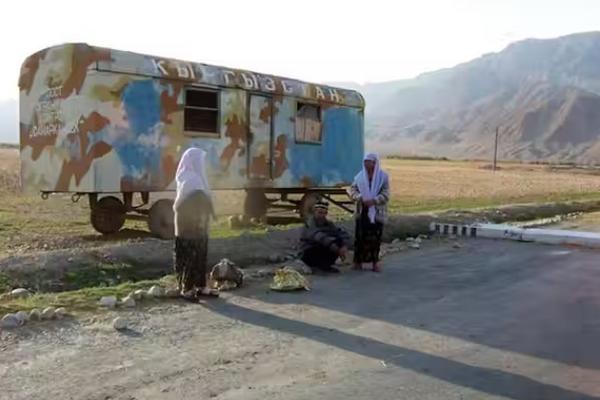
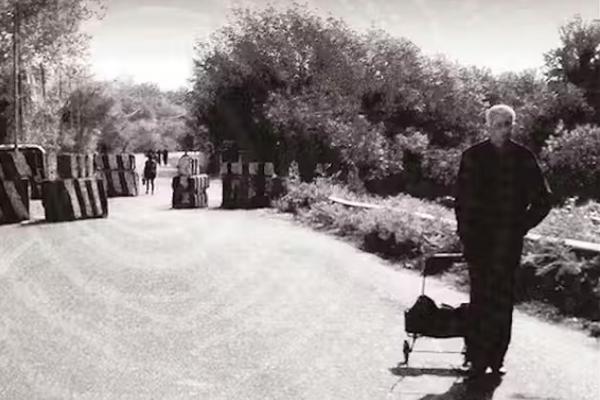
Over the past two decades, this has led her to examine the everyday workings of new international borders in the Ferghana valley, the impact of new roads and infrastructure investment at Central Asian boarders, the legacies of inter-communal conflict, and the rise of debt-driven labour migration from Kyrgyzstan. Her work on the everyday lives of Kyrgyz migrant workers in Russia was awarded the Rivers Memorial Medal from the Royal the Royal Anthropological Institute in 2018.
More recently, with funding from the Wellcome Trust, Madeleine has led a research team examining emergent markets of assisted reproduction. Focused on the states of Central Asia and the Caucasus, this project explores the intersection of labour migration, economic extraction, and social reproduction across borders.
Much of Madeleine’s research has been collaborative, and she has long-standing relationships with Kyrgyzstani universities and research institutes. She is currently developing new research on the politics of land, housing and voice in late Soviet Kyrgyzstan. This is part of a larger project on sovereignty and dispossession in late Soviet Central Asia, which seeks to rethink perestroika-era protest from the Soviet South.
Key publications
The Central Asian World
The Everyday Lives of Sovereignty: Political Imagination beyond the State
Recent articles
Falling into the Gaps, Together: On Peer Review as Intellectual Accompaniment
Vital Labors: Transacting Oocytes across Borders in the Post-Soviet Space
Books and Special Issues
2024. The Central Asian World. Abingdon: Routledge. Jeanne Féaux de la Croix and Madeleine Reeves, eds. [Part of the Routledge ‘Worlds’ series of academic handbooks, 50 original chapters]
2021. The Everyday Lives of Sovereignty: Political Imagination Beyond the State. Ithaca: Cornell University Press (with Rebecca Bryant)
2017. Affective States: Entanglements, Suspensions, Suspicions. New York: Berghahn. Initially published as a Special Issue of Social Analysis Vol. 59 (4), 2015 (with Mateusz Laszczkowski)
2014. Border Work: Spatial Lives of the State in Rural Central Asia. Ithaca: Cornell University Press, series on ‘Culture and Society After Socialism’.
2014. Ethnographies of the State in Central Asia: Performing Politics. Bloomington: Indiana University Press (with Judith Beyer and Johan Rasanayagam)
2012. Movement, Power and Place in Central Asia: Contested Trajectories. Abingdon: Routledge. Initially published as a special issue of Central Asian Survey (2011).
Articles and chapters
2023. On the Double Social Life of Failure. Journal of the Royal Anthropological Institute (part of the Special Issue, ‘After Failure’, edited by Catherine Alexander) 29, S1: 46-61
2022. Unsettled Space: Unfinished Histories of Border Delimitation in the Ferghana Valley. In Rico Isaacs and Erica Marat, eds., Routledge Handbook of Contemporary Central Asia. Abingdon: Routledge
2022. Falling into the Gaps, Together: On Peer Review as Intellectual Accompaniment. Political and Legal Anthropology Review 45 (1): 119-123.
2022. Vital labors: transacting oocytes across borders in the post-Soviet space. Cultural Anthropology 37 (1): 23-29.
2021. ‘Migratory Life’. In David Montgomery, ed., Central Asia: Context for Understanding. Pittsburgh: University of Pittsburgh Press
2019. The Queue: Bureaucratic Time, Distributed Legality, and the Work of Waiting in Migrant Moscow. Suomen Antropologi 44 (2): 20-39.
2017. Infrastructural hope: anticipating ‘independent roads’ and territorial integrity in southern Kyrgyzstan. Ethnos 82 (4): 711-737.
2016. “And Our Words Must Be Constructive!”: On the Discordances of Glasnost’ in the Central Asian Press at a Time of Conflict. Cahiers d’Asie Centrale 26 (1): 77-110.
2016. Diplomat, Landlord, Con-Artist, Thief: Housing Brokers and the Mediation of Risk in Migrant Moscow. The Cambridge Journal of Anthropology 34 (2): 93-109.
2015. Living from the nerves: deportability, indeterminacy and the feel of law in migrant Moscow. Social Analysis 59 (4): 119-136.
2014. Roads of hope and dislocation: infrastructure and the remaking of territory at a Central Asian border. Ab Imperio 15 (3): 235-256.
2013. Clean Fake: Authenticating Documents and Persons in Migrant Moscow. American Ethnologist, 40 (3): 508-524.
2012. Black work, green money: remittances, ritual and domestic economies in southern Kyrgyzstan. Slavic Review, 71 (1): 108-134.
2011. Staying put? Towards a relational politics of mobility at a time of migration. Central Asian Survey, 30 (3-4): 555-576.
2011. Fixing the border: on the affective life of the state in Kyrgyzstan. Environment and Planning D: Society and Space, 29 (5): 905-923.
Fiona Potter, University of Manchester (awarded 2026), Translating Multispecies Relationships in Central Norway (joint supervisor while in Manchester to 2023)
Claudia Eggart, University of Manchester (awarded 2024), Lived Geopolitics. Re-scaling Market Infrastructures at Retail Hubs in Odesa and Bishkek (joint supervisor)
Roosa Rytkönen, University of Manchester (awarded 2023), Doubt as the way to truth’: An Ethnography of Epistemic Navigation in Western Siberia (supervisor)
Laura Mafizzoli, University of Manchester (awarded 2023), Between Revelation and Concealment: Crafting Gulag Truths in Tbilisi, Georgia (joint supervisor)
Marhabo Saparova, Northeastern University (awarded 2023), Wearing, Carrying and Caring for the Nation: Gender, Power, and Mobility in the post-1990s labor migration from Turkmenistan in Turkey (committee member)
Takhmina Shokirova Wilfred Laurier University (awarded 2021), From Tajikistan to Russia and Back: Understanding Changes in Gender Relations through the lived experiences of Tajik migrant workers in Russia (committee member)
Grace Zhou, Stanford University (awarded 2021), Parasitic Intimacies: Life, Love and Labour in post-Socialist Central Asia (committee member)
Elena Borisova University of Manchester (awarded 2020), Locating the good life: paradoxes of migration in post-Soviet Tajikistan (supervisor)
Irina Levin, New York University (awarded 2017), Uncertain Returns: Citizenship and Law in the Caucasus (committee member)
Phaedra Douzina Bakalaki, University of Manchester (awarded 2017), Crisis, deprivation and provisioning in Xanthi, northern Greece: ordinary ruptures and extraordinary continuities (joint supervisor)
Deana Jovanović, University of Manchester (awarded 2017), Ambivalence and the work of hope: anticipating futures in a Serbian industrial town (joint supervisor)
Jake Fleming, University of Wisconsin (awarded 2017), Building Plant Bodies: People, Trees, and Grafting in the Walnut-Fruit Forests of Kyrgyzstan (committee member)
Rachel Smith, University of Manchester (awarded 2016), The goal of the good house: seasonal work and seeking a good life in Lamen and Lamen Bay, Epi, Vanuatu (joint supervisor)
Aminat Chokobaeva, Australian National University (awarded 2016), Frontiers of Violence : State and Conflict in Semirechye, 1850-1938 (committee member)
Ivan Rajković, University of Manchester (awarded 2015) Struggles for moral ground: problems with work and legitimacy in a Serbian industrial town (joint supervisor)
Medina Aitieva, University of Manchester (awarded 2015) Reconstructing transnational families: an ethnography of family practices between Kyrgyzstan and Russia (supervisor)
Hannah Wadle, University of Manchester (awarded 2014) Good tourism in transformation: moral tales from the Masurian lake district in Poland (joint supervisor)
Till Mostowlansky, University of Bern (awarded 2013), Azan on the Moon: Entangling Modernities on Tajikistan’s Pamir Highway (joint supervisor)
Madeleine has a long-standing interest in academic mentoring and addressing inequities of access to anglophone academic publishing. She has served as Faculty member for the USTA mentorship programme for early career scholars from Central Asia; she has run publishing workshops in Russian and Kyrgyz for the University of Central Asia’s Graduate School of Development; and has served as Director and Faculty member for a number of academic summer schools in Kyrgyzstan, Kazakhstan, Georgia and Armenia since 2006.
In the Universities of Manchester and Oxford she has served as PI/Co-I to post-doctoral mentees funded through, inter alia, Leverhulme, ESRC, GCRF, OSI, RCUK, Wellcome and Oxford-Georgia funding schemes.
In the School of Anthropology and Museum Ethnography at the University of Oxford, Madeleine teaches on the MSc Migration Studies, and currently directs the DPhil in Migration Studies. She has a particular interest in doctoral training, and in supporting early career anthropologists across the Collegiate University through professional development and mentorship activities. Beyond the University, she is passionate about communicating the value of anthropology to public debate. She has served on the Education Committee of the Royal Anthropological Institute, worked with sixth form colleges introducing the aborted A-level qualification in Anthropology, and is currently working on a book aimed at high school students and their teachers called ‘Why Study Anthropology?’