Why do magic and ritual survive for centuries?
New study suggests feeling left out may be part of the answer
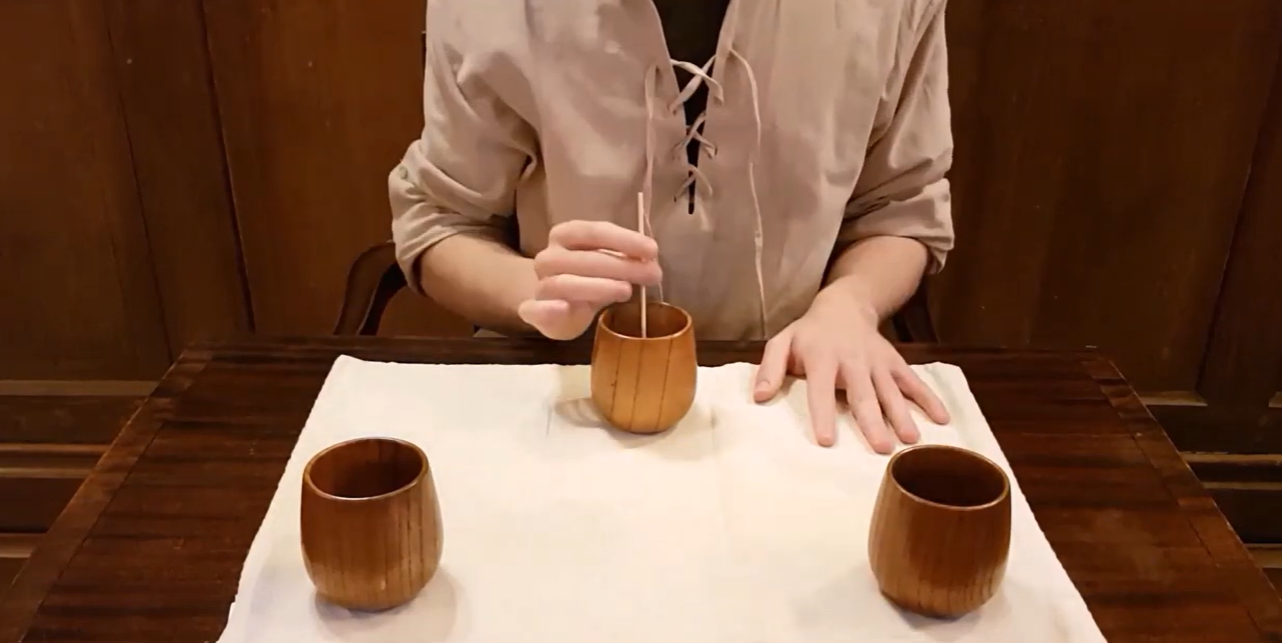
A screen shot from the video with actions that participants in the study were asked to copy.
New University of Oxford research, published in Evolution and Human Behavior, finds that people who feel excluded copy magical and ritual actions more faithfully, offering a clue to why some traditions are passed down almost unchanged for generations.
Lucky charms, magical cures and superstitions are part of everyday life for many people, and Halloween brings them out in force. Like handshakes, weddings and funerals, many such practices are passed down for generations with little change, even though they have no clear practical benefit.
A popular view among researchers is that magic is essentially early technology, people do it because they believe it gets results, and they learn it as they would any practical skill. A new study by Dr Robert Jagiello, Senior Researcher at the Peace Research Institute Oslo (PRIO), who carried out the research during his DPhil at Oxford's Centre for the Study of Social Cohesion, and Professor Harvey Whitehouse, Chair of Social Anthropology and Director of the Centre for the Study of Social Cohesion at Oxford’s School of Anthropology and Museum Ethnography, suggests that is only part of the story.
176 adults in the UK took part online in what was presented as a “historical imagination” study. After an audio journey into an imagined medieval world, they played Cyberball, a virtual ball-tossing game. For half of them, the other players, which were in fact computer-controlled, stopped passing them the ball.
Everyone then watched and attempted to copy short sequences of hand movements using a wooden stick and cups. The basic structure of each sequence (which hand, which grip, which cup) was always the same in every version. What changed was how it was described, along with small visual details that made its purpose more or less obvious (such as whether the cups held water and whether the stick touched the cup). Participants were given one of four rationales for the actions: a practical technique for filtering water, an expert technique that would be explained later, a magical procedure for cleaning water from a distance, or a medieval greeting with no practical purpose (the ‘ritual’ condition). Participants filmed themselves copying the sequences, and the researchers scored how accurately they did it.
The results showed that:
- Magic and ritual: people who had been left out copied the magical and ritual versions significantly more accurately than those who had been included.
- Practical techniques: being left out made no difference to how accurately people copied the practical and expert versions.
- Uniformity: a further, exploratory analysis revealed that people who had been left out also copied magical and ritual actions more uniformly, with less variation from person to person, which may help explain how rituals stay stable over generations.
“The size of the effect for the magical actions surprised us. They had a stated goal, so on many current theories people should have treated them like a practical technique. Instead, excluded participants copied them almost as faithfully as pure ritual.”

Feeling left out made people more careful only where an action looked like ritual. The authors call this bifocal stance theory. The theory proposes that people can approach the same action with two different mindsets: a practical one focused on the outcome, and a ritual one focused on doing it properly as a sign of belonging. Participants seemed largely unaware of this and none mentioned wanting to fit in when describing their thoughts during the task, which suggests much of it may happen without conscious awareness.
“Much of what we learn from others is not about efficiency. It is about showing that we belong. When we feel that belonging is under threat, we pay closer attention to ‘the way things are done’. Whether an action counts as magic, ritual or technology depends partly on the eye of the beholder, and on the social situation they are in.”

Questions about magic, ritual and why traditions persist have been central to anthropology since its beginnings. This study tests those long-running debates with experimental methods from cognitive science. The researchers say the findings now need testing in other groups and settings.
The study ‘Magic and ritual as affiliative strategies in response to ostracism threat’ has been published in Evolution and Human Behavior.