
Celebrating the 100th Birthdays of Audrey Butt Colson and Shirley Ardener
Audrey Butt Colson and Shirley Ardener began their careers at Oxford University in the 1950s and pioneered new approaches that are still relevant today.
Audrey Butt Colson
This March, Audrey Butt Colson, one of the pioneers of Amazonian anthropology in the UK, turns 100. She studied at Oxford under Evans-Pritchard and began her long association with Amazonia with fieldwork among the Akawaio people in Guyana in 1951-1952. She was appointed University Lecturer in Ethnology and an Assistant-Curator of the Pitt Rivers Museum in 1955 and later elected Fellow of St Hugh's. She has published extensively on the Akawaio and the neighbouring Arekuna, as well as briefly on the Wayana of Surinam whom she visited in 1963. The Pitt Rivers Museum contains over 300 objects collected by Audrey including films and audio recordings of Akawaio music.
Audrey has always been a strong and vocal supporter of the Akawaio land rights movement; in the 2000s she campaigned alongside them in their land disputes around hydroelectric dams, mining and forestry. She was virtually ruled persona non grata by the Guyanese government for her activism. From then on she worked in Venezuela. Since her retirement, which she took early, she has continued her work, publishing among other things her marvellously detailed work Land (2009). The School offers its sincerest congratulations and best wishes for a happy birthday.
Peter Rivière
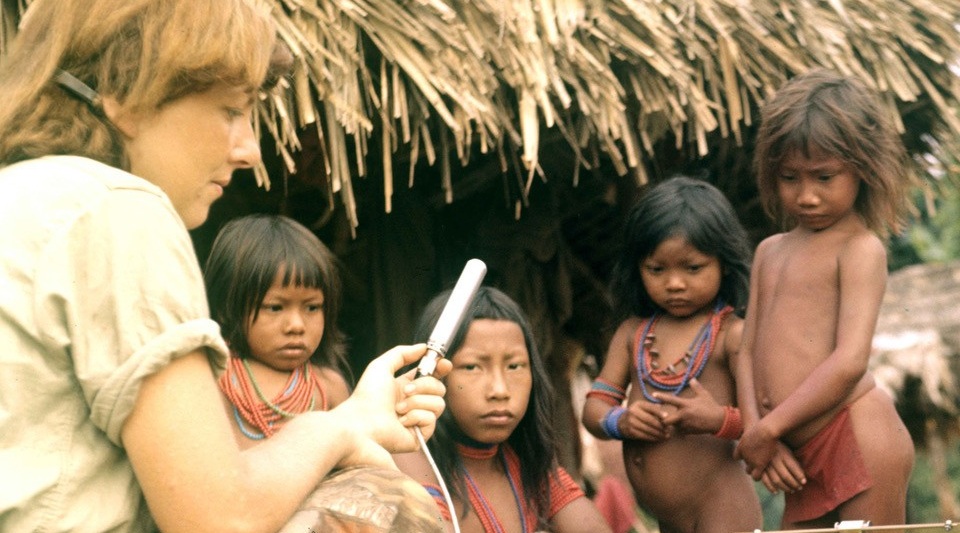
Audrey Butt Colson making tape recordings with the Wayana people of Amazonia, South America, in 1963. Photographer unknown (copyright Audrey Butt Colson).
Shirley Ardener
Shirley Ardener who celebrates her 100th birthday this April is a long term member of the department. Starting in the 1950s she did research in Nigeria and Cameroon with her husband Edwin Ardener. She continued being involved with Africanist research alongside her lifelong friend Sally Chilver, receiving visits and corresponding with many Cameroonian scholars. She was a pioneering feminist anthropologist, editing and contributing works now regarded as classics in the field, arguing for a gender sensitivity long before the term had been invented. These works include Perceiving Women, 1975 which also includes her essay Sexual Insult and Female Militancy, a foundational text demonstrating how the personal can be made deeply political. In 1964, she published an important analysis of forms of credit (Rotating credit associations) that has been influential on subsequent work on the informal economy and microcredit systems.
In Oxford she was the driving force behind the establishment of the Centre for Cross-Cultural Research on Women (CCCRW) which later became later became the International Gender Studies Centre (IGS). Her work was recognised by the RAI who awarded her the Welcome Medal for Anthropology in 1962. She was awarded an OBE in 1991.
David Zeitlyn
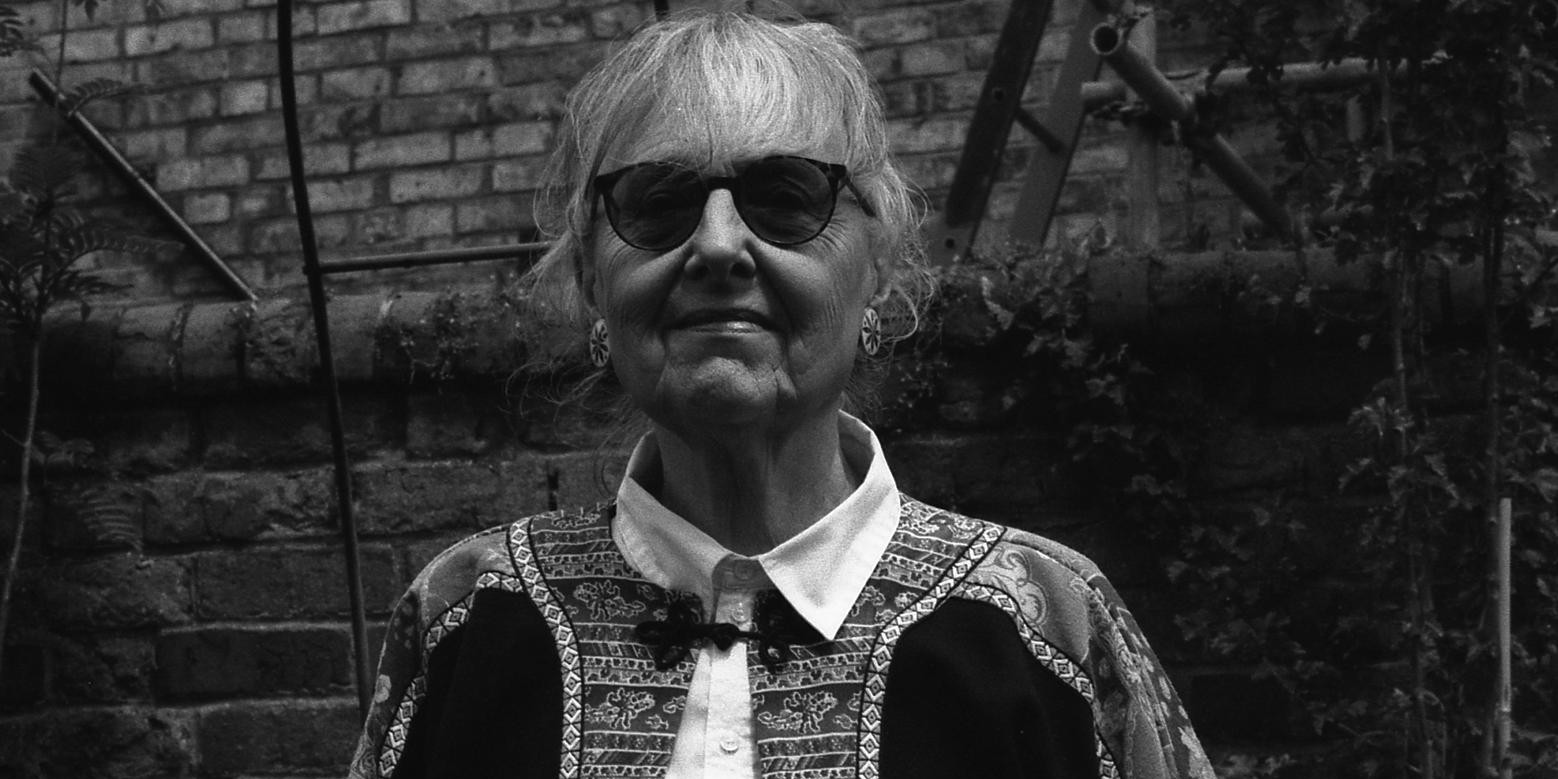
Shirley Ardener by Samuel Finlak, and by Joseph Chila
bromide fibre print, June 2005, NPG x128891
© Samuel Finlak / Joseph Chila / David Zeitlyn
bromide fibre print, June 2005, NPG x128891 | © Samuel Finlak / Joseph Chila / David Zeitlyn
With thanks to David Zeitlyn and Peter Rivière for their contributions to this article.