

Dr Thandeka Cochrane
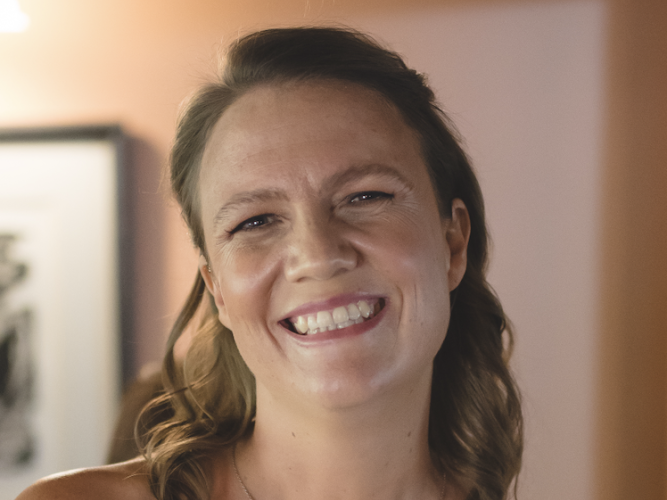
Leverhulme Early Career Fellow
Unit Affiliation
Bio
Thandeka was educated at the Universities of Cape Town (BA and Honours), Amsterdam (MSt) and Cambridge (MPhil and PhD). In 2020, she completed her PhD in Social Anthropology as a Gates Scholar at the University of Cambridge. Her doctoral study focused on libraries, literacy and children’s stories in rural Malawi. For the project she spent a year living in a rural village on the northern shores of Lake Malawi.
Prior to coming to Oxford, she was a Postdoctoral Research Associate for ‘Cartographies of Cancer: Epidemiologists and Malignancy in sub-Saharan Africa’ project funded by the Wellcome Trust and based at King’s College London. For that project she carried out fieldwork at cancer registries in Kenya, Uganda, Tanzania, Zimbabwe and South Africa, and undertook extensive archival research on the history of African cancer research.
Interests
Thandeka's work combines history and anthropology to help understand how the movement of knowledge between Africa and the global North shapes power dynamics, inequality and social justice.
She is a social anthropologist with a strong interest in medical anthropology and a distinct historical perspective. Her work incorporates science and technology studies and deals with issues of colonialism and post-colonialism in Africa. Her ethnographic focus is on east and southern Africa, with extensive research in rural northern Malawi, Mwanza and Moshi, Tanzania and Nairobi, Kenya. Ultimately her work examines the manifestations of global dynamics of power and knowledge in the every day, from village libraries, to cancer registries, to the work of women doctors.
She has worked on colonial histories and everyday practices of scientific knowledge production, the production of medical subjectivities and personhoods, decolonising knowledge, entanglements and meshworks, indigenous knowledges, African oral literature and early childhood education. Her recent article with Jennifer Fraser on ‘Meticulous Records’ was the winner of the William Bynum prize for best early career submission to Medical History.
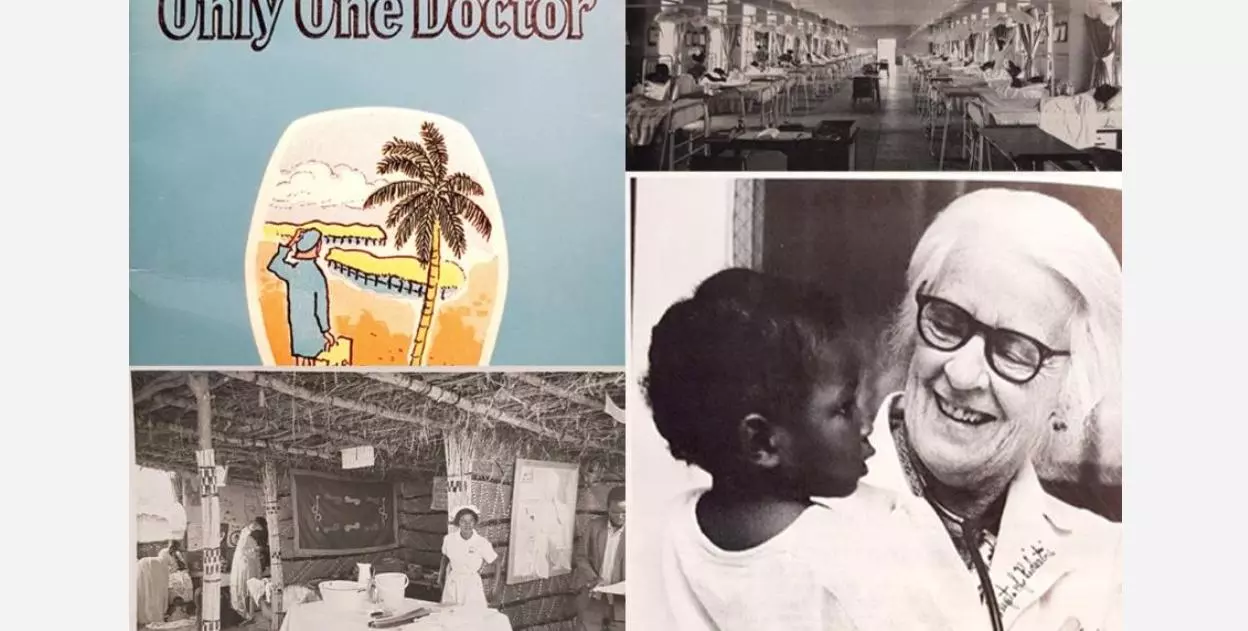
Current Project: 'Lady doctors'
Women doctor’s working in Africa over the last century were powerful and proactive agents in their societies - as practitioners of medicine, as producers of medical knowledge, and as pioneers. Yet while many studies have focused on women working as nurses, midwives, or lay healers, and literature exists on female doctors in Euro-America, very little is known about women doctors working in Africa.
This project will address this significant gap and explore themes of gender, race, class, colonialism and knowledge production. It will illuminate the inspiring stories of women doctors in Africa from the early twentieth century to the present day. Including Dr Cicely Williams, working in Ghana in the 1930s, who identified the disease of Kwashiorkor and gave it its local Ga name; and Dr Great Lowe-Jellicoe who went to work as a doctor in Nigeria in 1926, one of the first ‘lady doctors’ in the region. Oral history interviews and ethnographic fieldwork will complement these historical narratives with the experiences of African women doctors living today – from Dr Josephine Nambooze, the first black female doctor in East Africa (graduating in 1959), to Dr Lynnette Kyokunda, the first female HoD of Pathology at Makerere University.
By combining historical and contemporary data from 1900 to the present, the project explores what it means to be a woman doctor in Africa over time. It will provide a unique perspective on the continuities and shifts through British colonialism, independence struggles, and neoliberal reform. Importantly it will celebrate these women's stories of bravery, tenacity, triumph and success – of breaking glass ceilings and creating new possibilities for the women who came after them.
Find out more about Thandeka's work

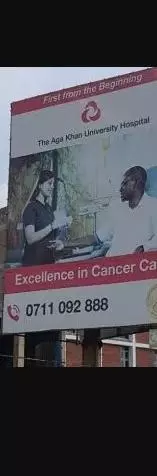
Cartographies of Cancer
Find out more about this Wellcome Trust Project
Selected Publications
Thandeka Cochrane and Jennifer Fraser. ‘Meticulous Records: Paper technologies, political worlds and the making of epidemiological data in 1980s Uganda’, Medical History, pp. 1-30.
David Reubi and Thandeka Cochrane. 2025. “Cartographic Infrastructures: Geographical pathology, tumour safaris, and colonial networks in British East Africa”, Social Studies of Science, pp. 1-30.
Thandeka Cochrane. 2024. ‘Meshworks, Entanglements and Healthworlds’, in James Cochrane, Gary Gunderson and Teresa Cutts, Handbook on Religion and Health: Pathways for a Turbulent Future, Edward Elgar, p. 366-378.
‘Political Stakes of Cancer Podcast’. 2024. With Shagufta Bhangu and Fabien Provost. A 12 episode podcast published on Somatosphere interviewing anthropologists studying cancer across the globe.
Thandeka Cochrane and David Reubi. 2023. ‘Africa, cancer and civilization: a recursive history of progress’, Bulletin of the History of Medicine, 97, 3, p. 423-455.
Thandeka Cochrane. 2023. ‘The power of stories: Oral storytelling, schooling and onto-epistemologies in rural Malawi’, Oxford Review of Education, 49, 4, p. 478-495.
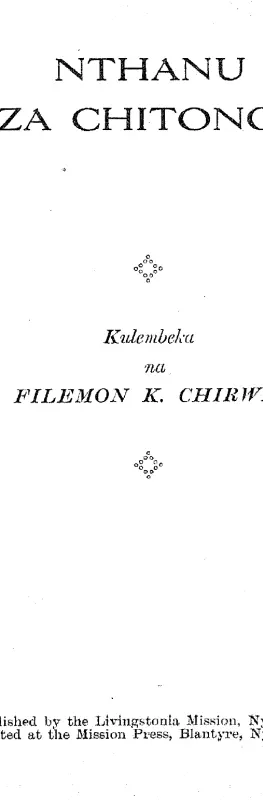
Thandeka Cochrane. 2022. ‘The politics of literature in Malawi: Filemon Chirwa, Nthanu za Chitonga and the battle for the Atonga Tribal Council’, Africa, 92:5, pp. 819-838.