
Why outdoing the neighbours may have led to male primates being bigger than females
Rethinking sexual selection in primates
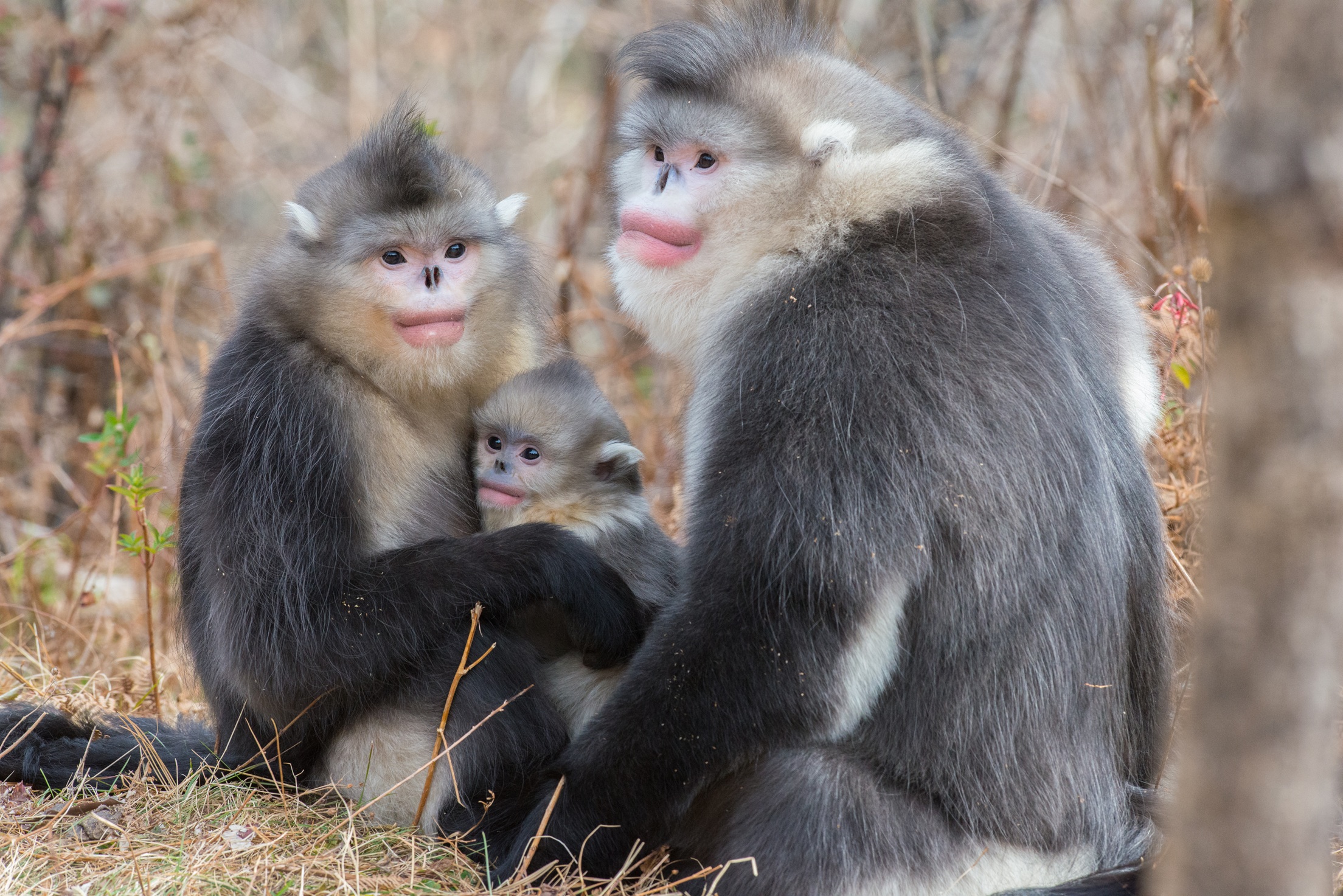
A family of three snub nosed monkeys - a large male(right) and a smaller female with a baby (left). Photo by Cyril C. GrueterCyril C Grueter
Male primates are often larger than females. Traditionally, scientists have explained this pattern through competition within social groups, such as fights over mates. New research now shows that competition between groups is also an important evolutionary force in shaping male body size.
Groups of primates do not generally live in isolation; they live alongside other groups and can face fierce rivalry.
By analysing data from over 140 primate species, a project led by Dr Cyril Grueter, Associate Professor in Evolutionary Anthropology, shows that species with greater territorial overlap tend to show greater sexual size dimorphism (SSD), with males being larger than females.
The tendency towards larger male body sizes continues even when groups aren't often fighting, suggesting that larger males function as effective deterrents, reducing the counts of actual conflict. What's more other research has demonstrated that in social mammals it is typically males that are involved in between-group conflicts. The difference in involvement in conflict between male and female primates provides a plausible explanation for why a similar evolutionary environment leads to sex specific differences in body size.
This research highlights the importance of spatial competition in shaping primate biology and offers new insights into how sexual selection operates.
Dr Cyril C. GrueterOur findings suggest that the evolution of large male body size in primates is about more than fights inside a group. Competition with neighbouring groups also appears to matter. For anthropologists, that is exciting because it shows how broader patterns of social life can shape the body itself over evolutionary time.