

Helping policy makers make policy
Doctoral Student Ibrahim Ince on his three month internship at Open Innovation Team (OIT)

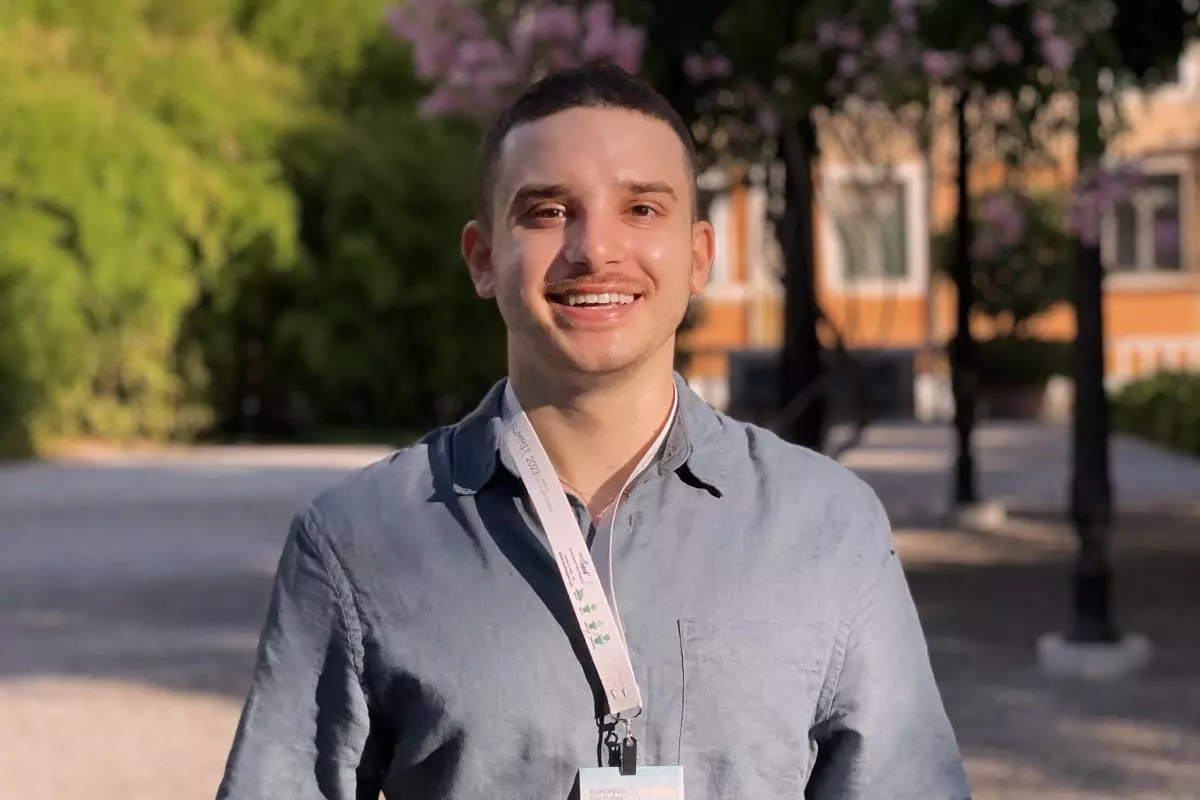
Ibrahim Ince
Doctoral study in Anthropology can take our students all around the world but for Ibrahim Ince it has taken him to Whitehall.
Ibrahim InceThe opportunity to learn more about how [Sanctuary Schemes are] implemented across the country through interviewing local stakeholders and victim-survivors, conducting a literature review and analysing data is a massive privilege.
Ibrahim is doing a three-month internship at the Open Innovation Team (OIT) within the Department for Education. OIT is the government's in-house research consultancy. It works with experts to generate analysis and ideas for policy, helping policymakers review evidence, engage experts, develop policy and evaluate impact.
During that time he is working on two evaluation reports:
Debt Advice in Prisons
Debt does not pause but instead accelerates during prison time, leaving prisoners in a far worse position once they are released. The government is trying to intervene in this issue by providing virtual debt advice within prisons. The OIT's role is to evaluate and paint a picture of how the pilot trial went by interviewing stakeholders such as prison leads, scoping the literature, and analysing data.
Sanctuary Schemes
One of the primary services offered to individuals who have faced domestic abuse is refuge or temporary accommodation. However, being relocated away from one's existing social networks and routines can itself add to the trauma. As a result, local authorities in the UK are offering a less disruptive alternative to victim-survivors. If the perpetrator is not living with the victim-survivor, security measures, such as special locks, CCTV, lighting and fencing, can be installed in their home so that they are, and feel, safer without having to relocate. The OIT is currently investigating how these schemes are implemented across the country.
This internship is funded by ESRC Grand Union DTP.
Ibrahim InceThe confidence to make insights more accessible and actionable through the use of clear language is a skillset I will take away with me. An anthropological mindset helps me navigate the complex, fast-paced and deeply collaborative nature of the policy world. Foregrounding stories, reading between the lines, navigating uncertainty and trying to piece together a comprehensive picture of what is unfamiliar are all developed through ethnographic practice, which certainly has use beyond the field.
About Ibrahim Ince
DPhil Student | St John's College
Ibrahim's ethnographic research focuses on the protracted dividing line in Cyprus and its complex manifestation in the UN-supervised Pyla village and the British-administered Pergamos village. He engages with themes such as kinship, gossip and surveillance, post-colonialism and infrastructure, temporality and adaptation. His research offers more intimate insights into how this border manifests and is experienced beyond its urban epicentre.
Ibrahim Ince

Border Backdrop: Shifting Visibility Along the Buffer Zone in Nicosia