
Constructing Worth: Care, Usefulness, and the Moral Life of Disability in Urban China
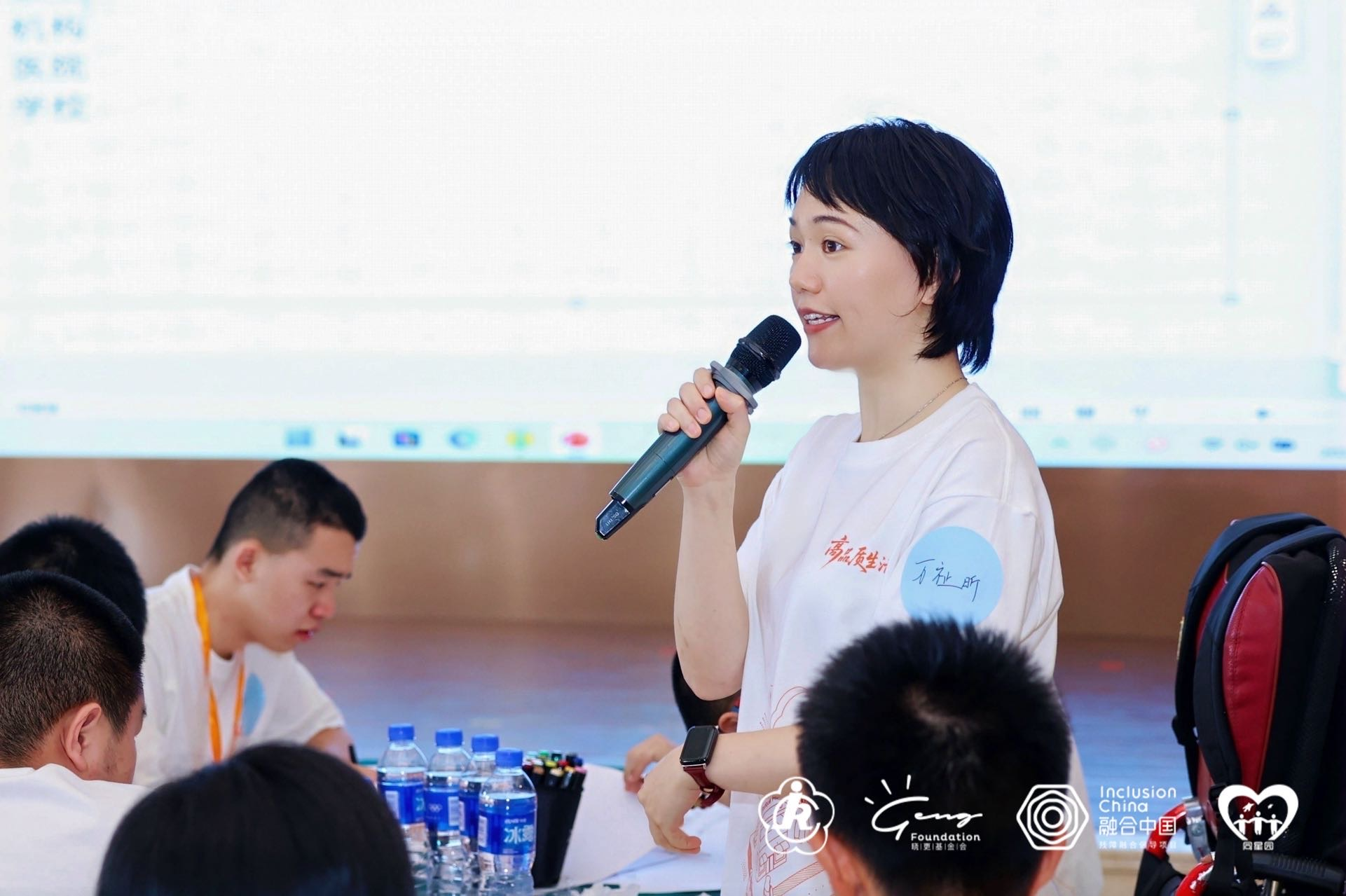
Zhixin Wan facilitates a panel on "Good Care" with several neurodiverse young self-advocates, centering a dialogue in which disabled speakers share their own lived experiences and understandings of good care practices. Photo credit: Inclusion China 2025 Annual Convention, an annual gathering of a nationwide network of parent-led advocacy organisations.Zhixin Wan
What does it take for a cognitively disabled individual to be included in society? For parent caregivers in China, abstract questions about belonging and human worth play out in the most concrete of daily decisions. Doctoral student Zhixin Wan aims to trace these parental efforts through her fieldwork project, "Constructing Worth: Care, Usefulness, and the Moral Life of Disability in Urban China". She has just been awarded a prestigious Wenner-Gren Foundation grant for $25,000 to help make this work possible. The project explores the lives of Chinese parents caring for children with cognitive disabilities - such as autism, Down syndrome, and cerebral palsy - as they navigate and help shape care industry, advocacy, and inclusion practices. Throughout these processes, the parents constantly confront and negotiate the moral complexities of what counts as a valuable life in contemporary China.
Zhixin WanWhat makes a life worth living?
For Chinese parents of cognitively disabled children, this is not an abstract ethical question but a daily moral negotiation-a continual effort to justify, defend, and reimagine the worth of their children's lives, and their own, in a world where human value is so often equated with independence and productivity.
She will draw on research she carried out for her Master's dissertation 'Reimagining Parenthood: Exploring the Altered Lives of Chinese Parents Caring for Children with Mental and Intellectual Disabilities' which was awarded a distinction here at the School of Anthropology and Museum Ethnography. This thesis followed five families, tracing the impact of children's disability on parents' social worlds and self-understandings. Funding for this doctoral study now allows Zhixin to carry out detailed ethnographic fieldwork to expand on some of the themes in her master's study. She will work with parent caregivers, advocacy hubs and NGOs. Through careful observation and semi-structure interviews she will collect the evidence she needs to begin to answer her big questions.
This research is anchored in moral anthropology but also builds upon an existing dialogue between anthropology of disability and kinship. It is a study that has a real opportunity to "make important contributions to the anthropology of disability, interdisciplinary critical disability studies, China/ East Asia studies through thoughtful engagement with questions about the ethics of care, [and] kinship responsibilities…" (Wenner-Gren Foundation Reviewer).